Walking stick From Wikipedia, the free encyclopedia Jump to navigationJump to search Cane (walking stick) redirects here. For use as a mobility aid, see Assistive cane. For the insects, see Phasmatodea.
A typical walking stick A walking stick or walking cane is a device used primarily to aid walking, provide postural stability or support, or assist in maintaining a good posture, but some designs also serve as a fashion accessory, or are used for self-defense.
Walking sticks come in many shapes and sizes and some have become collectors items. People with disabilities may use some kinds of walking sticks as a crutch. The walking stick has also historically been known to be used as a defensive or offensive weapon and may conceal a knife or sword - as in a swordstick.
Hikers use walking sticks, also known as trekking poles, pilgrims staffs, hiking poles, or hiking sticks, for a wide variety of purposes: to clear spider webs or to part thick bushes or grass obscuring their trail; as a support when going uphill or as a brake when going downhill; as a balance point when crossing streams, swamps, or other rough terrain; to feel for obstacles in the path; to test mud and puddles for depth; to enhance the cadence of striding, and as a defence against wild animals. Also known as an alpenstock, from its origins in mountaineering in the Alps, such a walking stick is equipped with a steel point and a hook or pick on top. One can improvise a walking stick from nearby felled wood. More ornate sticks are made for avid hikers and often adorned with small trinkets or medallions depicting conquered territory. Wooden walking-sticks are used for outdoor sports, healthy upper-body exercise, and even club, department, and family memorials. They can be individually handcrafted from a number of woods and may be personalised in many ways for the owner.
A collector of walking sticks is termed a rabologist.[1]
Contents 1 Origin 2 Accessories 3 Religious use 4 Types 5 American walking canes 6 See also 7 References 8 External links Origin
A classic late 19th century walking cane, sometimes also called a dress cane Around the 17th or 18th century, a stout rigid stick took over from the sword as an essential part of the European gentlemans wardrobe, used primarily as a walking stick. In addition to its value as a decorative accessory, it also continued to fulfil some of the function of the sword as a weapon. The standard cane was rattan with a rounded metal grip.[citation needed] The clouded cane was made of malacca (rattan stems) and showed the patina of age:
Sir Plume, of amber snuff-box justly vain, And the nice conduct of a clouded cane.
— Alexander Pope, The Rape of the Lock Some canes had specially weighted metalwork. Other types of wood, such as hickory, are equally suitable.
Accessories The most common[citation needed] accessory, before or after purchase or manufacture, is a hand strap, to prevent loss of the stick should the hand release its grip. These are often threaded through a hole drilled into the stick rather than tied around. A clip-on frame or similar device can be used to stand a stick against the top of a table. In cold climates, a metallic cleat may be added to the foot of the cane. This dramatically increases traction on ice. The device is usually designed so it can be easily flipped to the side to prevent damage to indoor flooring. Different handles are available to match grips of varying sizes. Rubber ferrules give extra traction on most surfaces. Nordic walking (ski walking) poles are extremely popular[citation needed] in Europe. Walking with two poles in the correct length radically reduces the stress to the knees, hips and back. These special poles come with straps resembling a fingerless glove, durable metal tips for off-road and removable rubber tips for pavement and other hard surfaces. Religious use
Orthodox protodeacon holding a walking stick. Portrait by Ilya Repin, 1877 (Tretyakov Gallery, Moscow). Main article: Staff of office Various staffs of office derived from walking sticks or staffs are used by both western and eastern Christian churches.[2][3] In Islam the walking stick (Asa) is considered a sunnah and Muslims are encouraged to carry one. The imam traditionally delivers the Khutbah while leaning on a stick.[4]
A collection of various styles of walking sticks on display at the ethnology museum Els Calderers rural manor, Sant Joan, Mallorca Ashplant an Irish walking stick made from the ash tree. Blackthorn an Irish walking stick, or shillelagh, made from the blackthorn (Prunus spinosa). Devils walking stick Made from Hercules plant. Shooting stick It can fold out into a single-legged seat. Supplejack Made from a tropical American vine, also serves as a cane. Penang lawyer Made from Licuala. After the bark was removed with only a piece of glass, the stick was straightened by fire and polished. The fictional Dr. Mortimer owned one of these in The Hound of the Baskervilles. So did Fitzroy Simpson, the main suspect in The Adventure of Silver Blaze (1892), whose lead weighted stick was initially assumed to be the murder weapon. Makila (or makhila) Basque walking stick or staff, usually made from medlar wood. It often features a gold or silver foot and handle, which may conceal a steel blade. The Makilas elaborate engravings are actually carved into the living wood, then allowed to heal before harvesting. Kebbie a rough Scottish walking stick, similar to an Irish shillelagh, with a hooked head. Whangee Asian, made of bamboo, also a riding crop. Such a stick was owned by Charlie Chaplins character The Tramp. Malacca Malay stick made of rattan palms. Pike Staff Pointed at the end for slippery surfaces. Scout staff Tall stick traditionally carried by Boy Scouts, which has a number of uses in an emergency Waddy Australian Aboriginal walking stick or war club, about one metre in length, sometimes with a stone head affixed with string and beeswax. Ziegenhainer Knotty German stick, made from European cornel, also used as a melee weapon by a duellists second. The spiral groove caused by a parasitic vine was often imitated by its maker if not present. American walking canes
This section does not cite any sources. Please help improve this section by adding citations to reliable sources. Unsourced material may be challenged and removed. (July 2018) (Learn how and when to remove this template message) In North America, a walking cane is a walking stick with a curved top much like a shepherds staff, but shorter. Thus, although they are called canes, they are usually made of material heavier than cane, such as wood or metal.
In the United States, presidents have often carried canes and received them as gifts.[citation needed] The Smithsonian has a cane given to George Washington by Benjamin Franklin. It features a gold handle in the shape of a Phrygian cap. In modern times, walking sticks are usually only seen with formal attire. Retractabl
Источник: https://www.thingiverse.com/thing:3904283
Автор: cncmodels4you
Лицензия: Creative Commons - Attribution
Другие модели автора
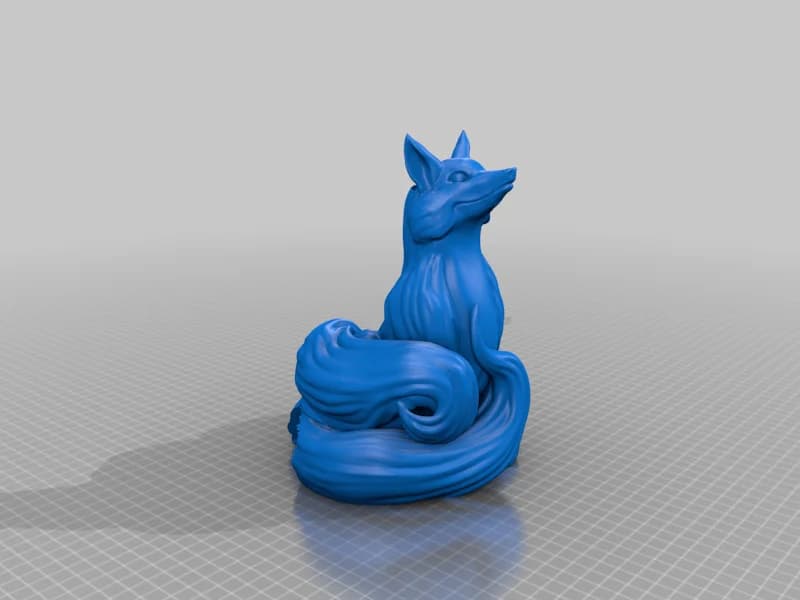
Все моделиСкачать Ручка трости волка — 3D-модель для печати на 3D-принтере
Скачать Ручка трости волка — 3D-модель для печати на 3D-принтере. Файл загружен автором Katalog3D на маркетплейс Каталог3Д и доступен для скачивания в формате STL или 3MF.
Лицензия. Перед использованием ознакомьтесь с условиями лицензии в карточке модели. Одни файлы разрешают только личную печать, другие — коммерческое использование. Подробнее — в разделе лицензии.
Смотрите также: другие модели этого автора, похожие файлы по тегам — wolf, casting, brass, cane.